
Big tech decisions need leaders and in-house experts to work together
The gap between those with expertise and those with influence has always existed, but somehow we’ve muddled through transformation over the last 15 years.
The change AI is triggering won't give us that time.
Decisions now need to be made faster than ever – this means decision-makers need to be well informed about how the technology works, and what it means for their organisation.
But many senior leaders feel technology is not “for them”, while in-house tech experts may lack the skills to influence up and make themselves understood.
How do we close this gap?
AI means acceleration
The 21st century organisation – the one built to operate in a fast-changing world – needs people who can make decisions about technology with an understanding of how it works.
If senior people don't understand tech well enough to make good technology decisions, and technical experts can't help their leaders develop strategies that work, discussions and approvals can easily go too far before it becomes clear that the idea is unimplementable, too expensive or just a poor fit.
Sometimes senior leaders take the advice of external experts and implement tools without understanding how the changes will affect their organisations’ people, services, products or work.
But when leaders take time to understand the technology by getting curious and listening to their in-house experts (who understand the organisational culture and context) an organisation can improve outcomes, and keep pace.
Social media algorithm changes are a good example. People on the ground – in content and digital teams – know when algorithm shifts are challenging an organisation’s existing approach. As supporter engagement now depends so heavily on these platforms, and algorithms change fast, fundraising and marketing directors are having to develop a deeper understanding and listen to their marketing technology experts more than ever before.
The same needs to happen with AI. Currently very few people within organisations have both deep technical expertise and strategic influence. We need to find ways to grow that group by helping leaders and in-house experts develop their skills.
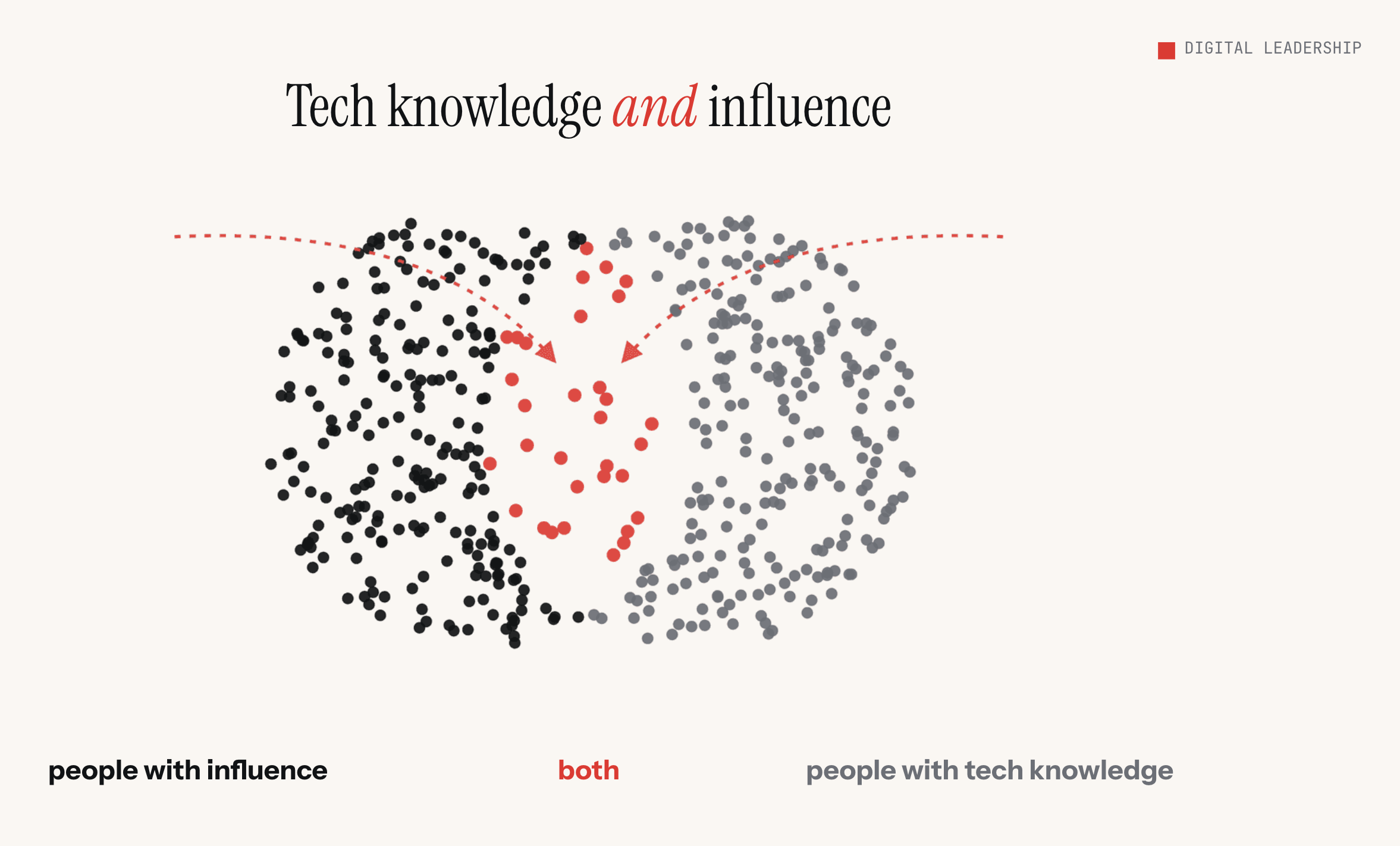
Bridging the knowledge/influence gap
Find out where the tech experts in your organisation are, and work out how you can give them a voice. Can you bring them into conversations? Could they be in the room, rather than just having their view represented?
Sometimes internal experts may need additional support participating in conversations at a senior level. They need to build up their soft skills which help them read the room, participate in conversation with the right level of detail and clarity and feel they are able to usefully contribute.
Meanwhile, senior leaders need to get curious and be unafraid to ask strategic questions. Where can technology most contribute to our purpose? Is there a part of our business model that the technology will challenge? Which of our main problems can technology help solve?
Mutual mentoring or skills swapping is a potential solution to both of these challenges. Could senior leaders spend 30 minutes weekly with technology specialists to understand more about the tech – and specialists can bring their influencing questions or scenarios?
Whatever approach you take, this work needs sufficient time and priorisation. Learning on both sides requires putting the hours in.
Big picture thinking needs technical detail
The long-term goal is having people who can do both the strategy and understand the technology. We can hire those people, but we should also be developing the people we have now to bridge that gap.
For senior leaders: to lead you need to build up an understanding of how the technology works and the impact it has on your processes and therefore people and their skills. You don’t need to become a technologist, but you do need to ask the right questions and get curious so you can understand what is changing and why. Having that knowledge is vital to ensure that technology is being commissioned and developed because it’s strategically important, not because it’s the latest shiny thing.
For technical experts: to get a seat at the table you need to develop the soft and influencing skills. Because it’s never just about the technical knowledge – how you use it in strategic discussions with leadership is equally important.
For organisations: accept that understanding technology is an important part of any (senior) job, so when you recruit, look for people who have the skills. Alternatively, recruit curious and adaptable people who can learn new things – whether this is a new tool, process or skillset.
Finally, make sure you always manage technology change as a project in its own right. Adoption is never just about how well the new technology has been developed, it’s also about the impact that change has on people’s standing in the organisation, their sense of agency or loss of control, and acknowledgement of their contributions – past and present.
Double-click to edit...